From Iberia to Al-Andalus. Northern gate, where the road begins.
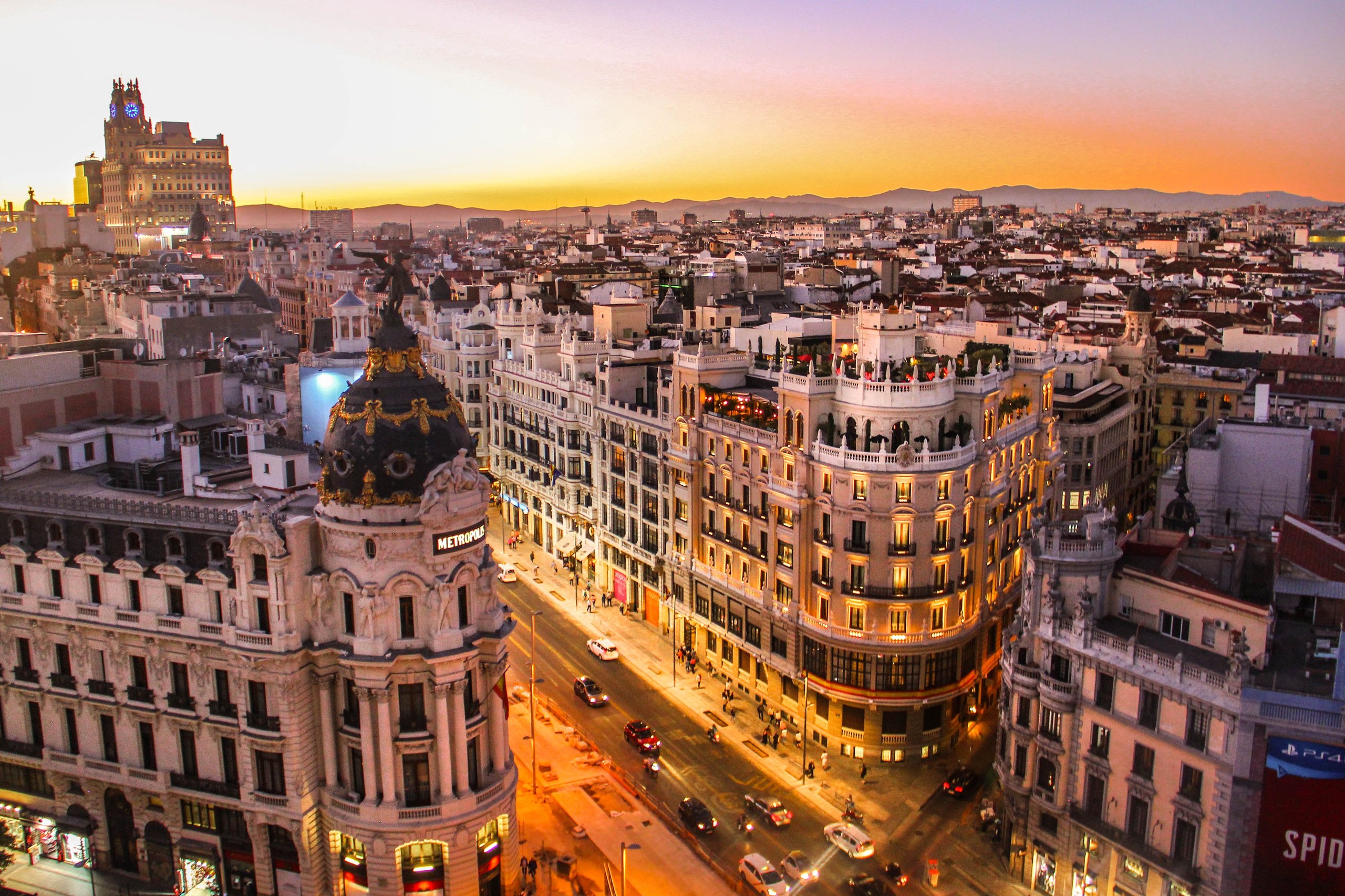
Madrid, the capital of Spain — a city to explore at your own pace, with grand museums, lively plazas, and a cultural rhythm that blends tradition with the contemporary. From Madrid, the route leads south through Toledo, Córdoba, Seville, and Granada.
Bridging the European and Islamic worlds through travel, tradition, and shared knowledge.
Themes for reading the city
Threads that help the historical currents stay visible as you move through monuments, neighbourhoods, landscapes, and trades.
Majrit: land of flowing water
Madrid reveals its character through water management, terraced landscapes, irrigation systems, and the practical intelligence that turned the terrain into enduring settlement.
Muslim-founded European capital
Madrid is best discovered through this theme as part of a longer route of continuity, exchange, and historical depth.
Ribat fortress defending Toledo and central Al-Andalus
Madrid is best discovered through this theme as part of a longer route of continuity, exchange, and historical depth.
Almudena, Al-mudayna, and citadel memory
Madrid is best discovered through this theme as part of a longer route of continuity, exchange, and historical depth.
Local rhythm and seasonal calendar
What's happening in Madrid, with a cue to the city's seasonal and cultural pulse.
Madrid Book Fair
CultureOne of the city's most important annual cultural rhythms: authors, publishers, readers, and long walks through the Retiro's book-lined avenues.
Veranos de la Villa
FestivalMadrid's long summer festival cycle, useful for travellers who want the city through music, performance, and public-night atmosphere rather than only daytime monuments.
El Rastro
MarketMadrid's best-known open-air market and one of its clearest urban rituals: antiques, reuse, collecting, and street energy in the older southern fabric of the city.
Book an experience
Reserve your place directly from the guide.
Route guidebook
Link city gateways and regions into coherent itineraries, with stages, practical continuations, and suggested route lines.
Follow our caravan route
The main historical onboarding sequence through Spain: arrival, threshold, capital, last kingdom, and onward extension.
Best for: Best for first-time route travellers and city-to-city historical orientation.
Direct AVE continuation when travellers skip Toledo.
Quick historical highlight
Three short cues placing Madrid within the main route, its historical thread, and its present local reality.
A large city with a strong international mix
Madrid's registered population is now around 3.5 million, with 19.4% of residents holding foreign nationality and 30.5% born abroad. That makes the city unusually important for travellers, relocators, international students, and cross-cultural services.
A tourism and entry market big enough to matter
The city received 11.2 million visitors and 23.3 million overnight stays in 2024. Madrid is not just a city break market: it is one of the most strategic entry points for converting cultural tourism into longer historical routes.
A route, meetings, and transport capital
Madrid hosted 54,784 meetings in 2024 and remains Spain's strongest combined airport and high-speed rail hub. For this project, that means strong demand for first-day orientation, guided transitions, and tailored route planning south.
Travelling through time in Madrid
Madrid should open with a correction of expectations: this is not just the court capital or museum capital of Spain, but a city whose buried origin story leads back to water, channels, defensive intelligence, and a Muslim frontier settlement.
Madrid invites readers to go deeper than a simple political timeline — to approach the city through its historical currents, the shaping of narratives over time, the figures and stories that defined eras, the rise and fall of dynasties, the technological advances whose traces remain visible, and the present-day meaning of the stories carried by this place. In the Al-Andalus Experience approach, history is discovered on the road with empathy, imagination, and practical context.
The article should move in this order:
1. Majrit / Mayrit as a place of flowing water. 2. The frontier logic of a defended outpost tied to Toledo. 3. The wall, the citadel, La Moreria, and the gate-memory of the city. 4. Christian and royal reuse of the same commanding ground. 5. Modern Madrid as arrival hub and route launcher into Al-Andalus.
Avoid writing Madrid as a generic overview of Austrias, Bourbon reform, and modern nightlife. Those layers matter, but for this project they should remain secondary to the city's role as a hidden threshold into the route.
The page should guide readers from Atocha and Paseo del Prado to the Royal Palace, Almudena, Emir Mohamed I wall remains, La Moreria, Puerta del Sol, Puerta de Toledo, Puerta de Alcala, and Casa Arabe. The hidden Madrid story is water, walls, gates, medina, ribat, gardens, and later capital identity.
Explain Madrid's Islamic founding without flattening Christian diversity in early Iberia. Keep Jewish presence visible within the broader Madrid-Toledo corridor, even if Toledo remains the stronger Jewish narrative center. Show how later royal Madrid absorbed and monumentalized older Islamic urban space. Keep the city readable for today's international population rather than treating history as sealed off from current demography.
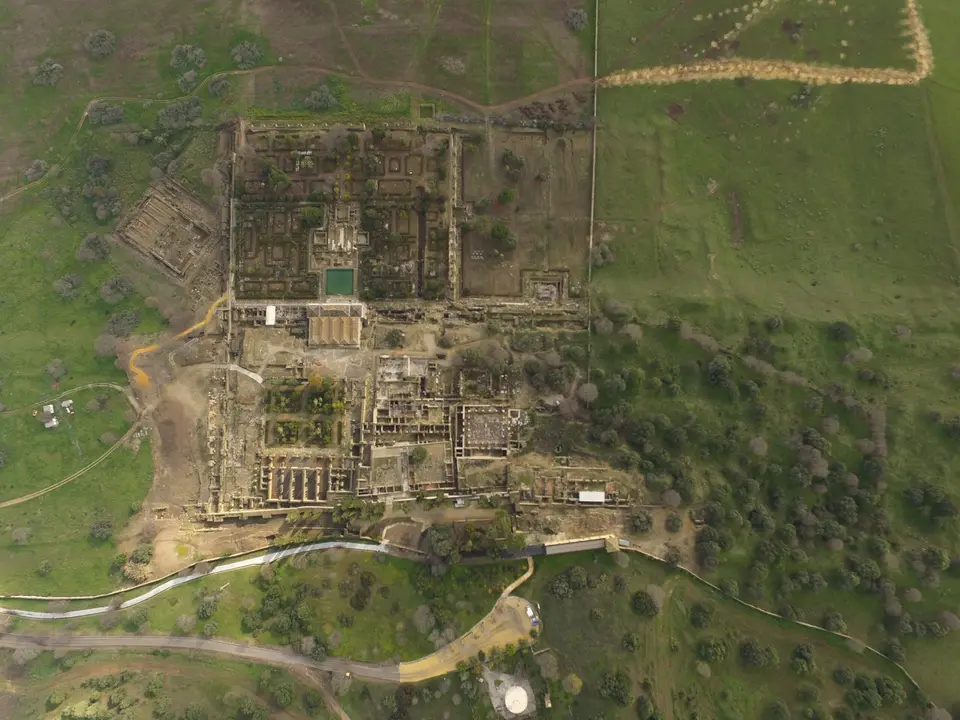
Emir Muhammad I wall remains: frontier Madrid made visible.
Almudena / Royal Palace ground: power keeps returning to the same ridge.
La Moreria: the city's Islamic and post-Islamic urban memory below the monumental layer.
Puerta del Sol and Puerta de Toledo: gate names as surviving route memory.
Atocha: today's route-south infrastructure replacing older military and caravan logic.
Casa Arabe: present-day cultural bridge rather than historical monument.
Majrit: land of flowing water.
Muslim-founded European capital.
Ribat fortress defending Toledo and central Al-Andalus.
Almudena, Al-mudayna, and citadel memory.
Emir Mohamed I wall and La Moreria.
Puerta del Sol / Bab Shams and Puerta de Toledo / Bab Tulaytulah.
Atocha as high-speed rail gateway to Cordoba, Sevilla, Malaga, Barcelona, and Granada.
Follow our caravan route
Begin in Madrid when the route needs an arrival city, a first-night base, or a historical reorientation before heading south. From the capital, the most complete reading moves first to Toledo, where Visigothic power, Jewish memory, translation culture, and the Christian-Muslim hinge of Iberia become more legible.
Travellers in a hurry can continue directly by AVE toward Cordoba, but the fuller caravan rhythm is Madrid -> Toledo -> Cordoba. That sequence turns arrival into understanding: from frontier water-city, to hilltop capital, to the Umayyad metropolis.
If the traveller is building a broader Iberian loop, Madrid can also connect onward toward Sevilla, Malaga, Granada, or later Barcelona. But for the core Al-Andalus reading, Madrid should feel like the opening gate rather than the destination that closes the story.
Move through it at your own pace
Strong independent route city. The page should include airport-to-Atocha logic, AVE departure options, and a self-guided Islamic origins walk.
Where guided help changes the reading
Useful for airport pickup, welcome transfer to Toledo, Madrid orientation, and trip-start briefing.
Madrid as a chapter in the wider route
Madrid is the northern arrival gate, modern capital, transport hub, and Islamic-origin surprise. It should convert airport arrivals and rail travellers into the Al-Andalus route.
Journey with us through the heart of Al-Andalus. Madrid is the northern arrival gate, modern capital, transport hub, and Islamic-origin surprise. It should convert airport arrivals and rail travellers into the Al-Andalus route. Production-intent draft based on recent public sources reviewed on 2026-05-17:
Madrid's registered population is now around 3.5 million. Around 19.4% of residents hold foreign nationality. Around 30.5% of residents were born abroad. The city received 11.2 million visitors in 2024 and generated 23.3 million overnight stays. Main international source markets listed by Madrid tourism sources include the United States, Italy, France, the United Kingdom, and Mexico. Madrid hosted 54,784 meetings in 2024, confirming the city's importance as a MICE destination as well as a leisure gateway.
What this means for the page:
Madrid is not just a cultural stop. It is a large international entry market. The page must serve first-time travellers, route travellers, expats, collaborators, and longer-stay professionals. The strongest opportunity is conversion from arrival city to route city: Madrid to Toledo, Cordoba, Sevilla, Granada, Malaga, or Barcelona by AVE. The city also supports a strong services layer: airport pickup, legal/admin help, coworking, language exchange, orientation, and custom route design.
Flagstones and reading points
Places and experiences that help readers interpret Madrid inside the wider route rather than as an isolated stop.
Map of Madrid
Connect the reading of a place to real movement: neighbourhoods, medinas, stations, workshops, and later coverage radius and geographic references.
Madrid beyond the surface
Strong source content exists. Preserve the Majrit/water/fortress story and transport connection section.
Madrid City Council demographic releases and padron statistics pages
Madrid Convention Bureau tourism statistics pages
Madrid Convention Bureau 2024 meetings-impact release
Our service is shaped by over 15 years of guiding travellers through these cities — by people who walk this route regularly with a passion for sharing a living experience of history and knowldedge through your journey.
Local specialists, drivers, and welcome support
Real on-the-ground help in Madrid for individual travellers, families, and groups — and a doorway for travel professionals, guides, and local specialists who want to join with quality and good practice.
Request a vetted specialist
Guide, driver, assistant, or local connector. We match you with options aligned with the route rhythm and the right audience.
Join as a specialist
If you work locally: drivers, guides, artisans, educators, hosts. The path includes standards, audience fit, and a quality audit before public listing.
Integration and optimisation
If approvable, we help integrate your service into our pages, scripts, agendas, channels, and workflows (booking, documentation, distribution).
Audience fit: travellers, locals, schools, groups, etc.
Quality and reliability: safety, punctuality, communication.
Editorial coherence: history and experience without crude bias.
Integration readiness: links, widgets, guides, weekly rhythm where relevant.
Practical help on the ground
Travel with confidence: local support, trusted contacts, and practical help that takes the pressure off planning — whether you travel solo, with family, or in a group.
Legal support for foreign residents
Madrid Expats Legal · Immigration · ES/EN/FR
Useful for residency, visas, NIE paperwork, and first-stage settlement support for travellers, relocators, and long-stay professionals using Madrid as a base.
Madrid technology community
Madrid Tech Alliance · Ecosystem · Events
A useful bridge into the city's professional ecosystem through meetups, job fairs, and community events. Important for the expat and collaborator side of the project.
International language exchange
Tandem Madrid · Exchange · Social
Weekly language exchange events that make Madrid easier to enter socially. Relevant for newcomers, returning travellers, and people testing whether the city could support a longer stay.
Paper once mattered not because it was permanent, but because knowledge could travel through it: copied by hand, carried across borders, memorised, experienced, shared.
For teachers, schools, and institutions: history becomes clearer when students can walk through it.
Every city along the route holds a workshop, a recipe, a melody, a way of making that no book can teach. The best guide is the one that leads you to the door of someone who knows.
Local places along the route
Workshops, spaces, and practical stops that make Madrid legible beyond the usual checklist.
Casa Labra M
Founded in 1860, Casa Labra remains one of Madrid's classic tavern stops. It is known for cod, croquetas, and the way old political and social Madrid still lingers in its atmosphere.
Mercado de San Miguel
A polished but useful stop for travellers who want a compact taste of Madrid's food culture in a central setting. Best treated as a gateway to the city's broader culinary life rather than the final word on it.
Casa del Libro Gran Via
A practical cultural stop for readers, maps, language material, and browsing before continuing south. Useful for travellers who want Madrid to serve as a reading city as well as a transit one.
Impact Hub Madrid
One of the city's best-known coworking and innovation environments. Relevant for remote workers, relocating professionals, and collaborators who need Madrid to function as more than a short cultural stop.
Shambala Madrid
A useful example of the quieter side of Madrid: classes, wellness routines, and community rhythms that support longer stays and soft landings in the city.
The Principal Madrid
A strong central base for travellers who want walkable access to the Paseo del Prado, the old core, and onward route logistics without losing comfort and a sense of occasion.
Casa Labra II
Founded in 1860, Casa Labra remains one of Madrid's classic tavern stops. It is known for cod, croquetas, and the way old political and social Madrid still lingers in its atmosphere.
Mercado de San Miguel II
A polished but useful stop for travellers who want a compact taste of Madrid's food culture in a central setting. Best treated as a gateway to the city's broader culinary life rather than the final word on it.
Casa del Libro Gran Via II
A practical cultural stop for readers, maps, language material, and browsing before continuing south. Useful for travellers who want Madrid to serve as a reading city as well as a transit one.
Impact Hub Madrid II
One of the city's best-known coworking and innovation environments. Relevant for remote workers, relocating professionals, and collaborators who need Madrid to function as more than a short cultural stop.
Shambala Madrid II
A useful example of the quieter side of Madrid: classes, wellness routines, and community rhythms that support longer stays and soft landings in the city.
The Principal Madrid II
A strong central base for travellers who want walkable access to the Paseo del Prado, the old core, and onward route logistics without losing comfort and a sense of occasion.
Access fuller digital travel guidebooks from Madrid
Choose the format that fits your journey: read full guidebooks inside the app, download PDF editions for offline travel, or browse themed routes and extended city reads through external channels.
Unlock in-app guidebooks
Access deeper digital guidebooks by city, theme, or travel route, with room for subscriptions, traveller libraries, and route-aware planning tools.
Download PDF guide editions
Route packs, city readers, and theme-based PDF editions as downloadable companions for independent travellers, groups, and returning readers.
See the Etsy storefront model
Curated guide products available through Etsy as an external sales and discovery channel, and a practical example of how local partners can diversify their distribution.
Each guide is available by city, by theme, or as a full-route edition. Digital formats for reading on the move, downloadable PDFs for the road, and storefront copies for those who prefer a different way in.
Use Madrid as a traveller guide, a meeting ground for collaboration, and a threshold into the wider route behind it.
If you are travelling, these pages help you plan, book, and move through the route with more context. If you are a local provider, guide, artisan, educator, host, or collaborator, you can connect your services, projects, and partnerships to the living Al-Andalus route here.
Plan a route with us
Use the Al-Andalus Experience planning tools for route design, city sequencing, timing, and practical support before or during the trip.
Browse trips and guided formats
See how travel products, bookable structures, and practical route-building work for independent travellers, small groups, and custom itineraries.
Shape a richer on-the-ground experience
Explore how routes, city pages, and guided sessions turn into stronger local experiences, add-ons, and custom group formats.
Prepare a longer stay or local landing
For travellers, remote workers, families, or returning visitors who need more than a one-day visit: practical orientation, local support, and a slower landing in the place.
Discuss study trips and educational rates
Use the same route and city network for schools, cultural groups, and educational travel, including cases where special conditions or pricing need to be discussed directly.
Draft a quick local page or project
Use Spaces for light marketing, quick landing pages, first-draft local initiatives, and early collaboration or lead-generation surfaces.
Develop travel offers and route products
Design city-based offers, trip structures, booking surfaces, and local distribution partnerships.
Package experiences and guided formats
Turn tours, workshops, day plans, and local specialist formats into clearer public offers that can be published, tested, and distributed.
Build educational and cultural programmes
Develop study trips, heritage interpretation, workshops, schools, cultural institutions, and structured learning formats with stronger delivery tools.
Present craft, making, and artisan work
Bring traditional arts, products, workshops, and makers into clearer digital presentations and local-commercial collaboration formats.
Train, practice, and onboard collaborators
For assistants, guides, collaborators, and partner onboarding where training, apprenticeship, and repeatable standards matter.
Talk collaborations and affiliate distribution
Discuss local development, partner onboarding, affiliate or distribution arrangements, and how your work can connect into the main network.
Support expat-facing or mixed local audiences
Design offers that speak to locals, expats, newcomers, mixed communities, and culturally curious visitors without forcing them into separate product categories too early.
From here you can: plan a route, turn your offer into a bookable experience, build educational programmes, present your craft or artisan product or integrate your service into the local network.
Take part
Madrid also runs on its local, cultural, and professional network.
List your place or project
From neighborhood specialists to cultural institutions and route partners, Madrid needs a more curated set of listings than generic directory traffic.
Add listing →Share the city's cultural rhythm
Book fairs, exhibitions, talks, guided walks, and smaller recurring events should be legible to travellers and locals in one place.
Create event →Connect route and local networks
Use Madrid as a meeting ground between travellers, collaborators, guides, institutions, and the city's international communities.
Connect →Service Gates
Your gateway to a deeper connection with the route
Whether you travel, collaborate, learn, or craft — each path opens through its own gate.
Travel Style Gate
Plan your journey your way — independent, guided, or a mix of both across the route.
Collaborations Gate
For local professionals, global partners, and anyone who wants to contribute to the route.
Learning & Craft Gate
Coaching, mentorship, craftsmanship, and studio practice — deepen your knowledge and skills.
Request a call or proposal
Tell us which road you are entering from: travel, collaboration, guides, or content. We will follow up with the context of this page.